
A tyre’s tread pattern helps explain its design, but it does not tell a tyre shop everything needed to recommend or order it. Start with the customer’s use and the vehicle requirements, then check the exact model, size, ratings and fitting markings.
This guide uses four models listed in the Grenlander Australian range to help workshop staff explain what customers can see in a product picture—and what still needs checking before a quote becomes an order.
Start with the words customers use
“I want something with more grip” or “Can I get a chunkier tyre?” is the start of a conversation. Ask which roads the customer normally uses, what they want to change about their existing tyres, and whether the vehicle carries loads or tows. Record their answers alongside the vehicle details and current tyre specification.
A useful response at the counter is: “Let’s check the specification your vehicle needs, then compare the patterns intended for your driving.” This keeps the discussion connected to the job the tyre must do.
Recognise the main parts of a tread
Grooves are the channels through the tread; blocks are the raised rubber sections between them. Ribs run around the tyre, while sipes are narrow cuts within the tread blocks. These terms describe features, rather than a complete performance rating.
Symmetrical patterns have a similar layout across both halves. Asymmetric patterns use different inner and outer layouts. Directional designs have a specified rolling direction. Check the tyre’s actual fitting markings and manufacturer instructions rather than deciding orientation from a catalogue photograph. These general distinctions are explained in Continental’s tread pattern guide.
Four Grenlander examples to use in a customer conversation
The descriptions below combine the current product pages with the same model names in the 2017 Grenlander catalogue. That older catalogue is a design reference, not confirmation of today’s Australian sizes or availability. Use the linked product specification table and a supply enquiry for the exact variant required.
ENRI U08: explaining an asymmetric layout

The ENRI U08 product description and catalogue identify an asymmetric pattern. It provides a concrete example when a customer asks why the two sides of a tread look different. Point out the differing layouts, then explain that the fitting instructions come from the tyre markings and manufacturer guidance.
Do not turn “asymmetric” into a promise that it will outperform another tyre in every condition. For a quote, open the ENRI U08 sizes and specifications and identify the complete row required.
L-ZEAL 56: ribs, grooves and shoulder blocks

The catalogue describes L-ZEAL 56 with shoulder blocks, a central rib and four straight grooves. These are useful features to point out in the product image when explaining the vocabulary of tyre design.
A customer can understand what those features are without being given an unsupported braking-distance or tyre-life claim. Move from the illustration to the L-ZEAL 56 specification table before discussing an order.
MAGA A/T TWO: connecting the pattern to the intended use

The MAGA A/T TWO catalogue entry describes connections between tread blocks, deep sipes and staggered shoulder lugs. Use these features to introduce the model’s all-terrain positioning, then ask about the customer’s actual mix of sealed and unsealed roads.
Keep the full name on the enquiry: MAGA A/T TWO is not interchangeable with MAGA A/T ONE. Check the MAGA A/T TWO product specifications. For the broader use comparison, refer to our all-terrain versus highway-terrain guide.
DRAK M/T: describing open tread spaces
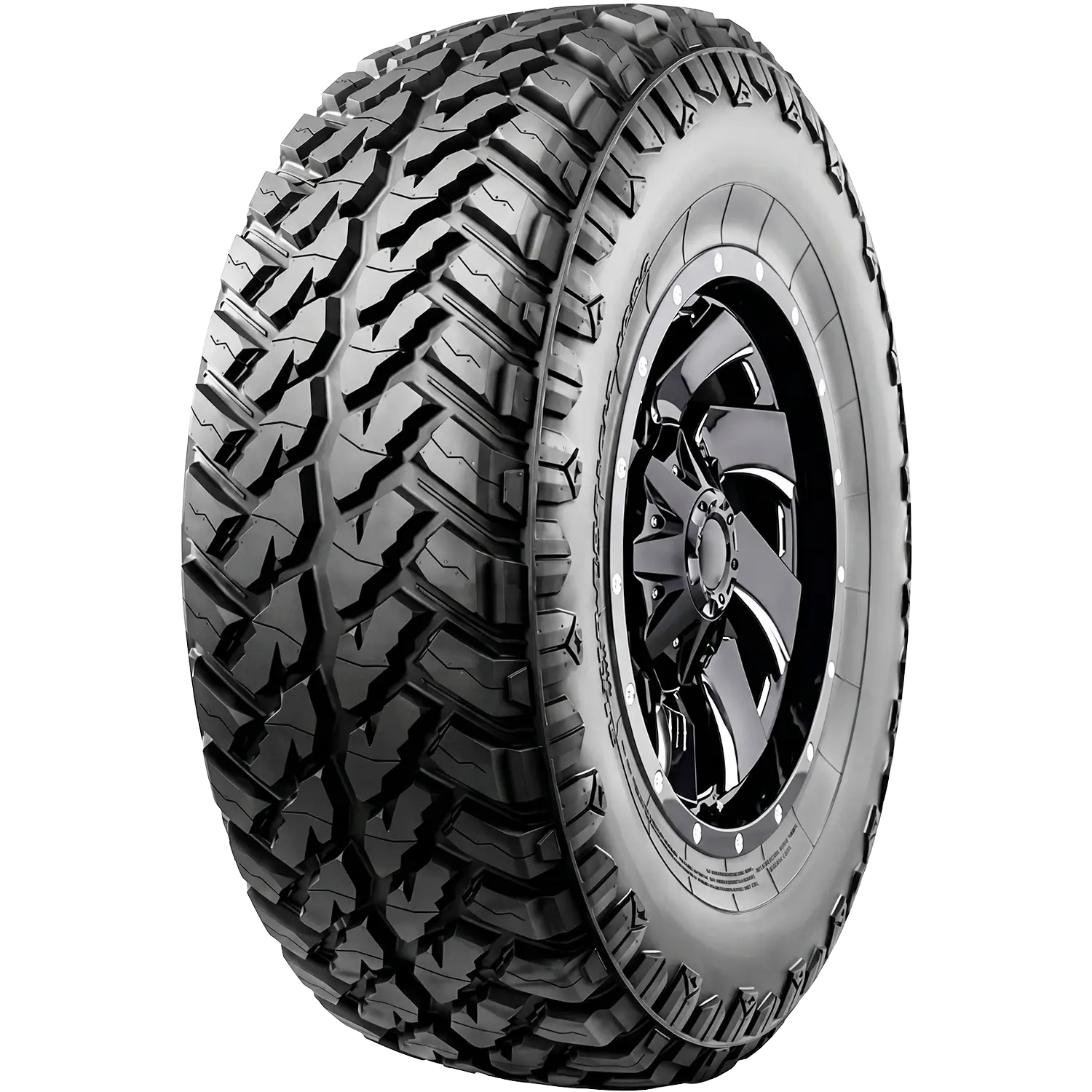
The DRAK M/T catalogue describes open spaces in the pattern intended to help clear mud and dirt. That gives staff a specific design feature to explain when discussing its mud-terrain positioning.
Ask why the customer wants a mud-terrain tyre and how the vehicle is used between off-road trips. Check the DRAK M/T listed sizes and ratings rather than treating its appearance as proof of fitment. This guide does not claim a measured noise level, wet-braking result or service life for the model.
Keep three different questions separate
| Question | What to record | Next step |
|---|---|---|
| What does the pattern look like? | Exact model; relevant ribs, blocks, grooves or asymmetric layout. | Use the manufacturer description and matching product image. |
| What use is being discussed? | Customer’s usual roads, load use and reason for changing. | Compare that requirement with the model’s documented intended use. |
| Which specification is required? | Full size, load and speed ratings, construction markings and quantity. | Have the proposed specification checked against vehicle and wheel requirements. |
For more detail on the specification question, read our load index and speed rating guide and passenger versus LT tyre guide.
Turn the conversation into an enquiry the supplier can answer
Keep each proposed model and specification on its own line. Include quantity, delivery postcode and any question that needs technical confirmation. If a supplier proposes an alternative, record it separately so it can be reviewed before approval.
For example, “MAGA A/T TWO, full specification to be confirmed, four tyres, delivery postcode, regular sealed-road use with weekend unsealed-road travel” is a useful initial discussion note. It still needs the complete specification before an order can be approved. A photo of a tread alone is not enough.
Use our wholesale enquiry checklist and downloadable order sheet to capture those details. Then request a Grenlander wholesale supply check for the model and specification your workshop needs.
Source notes
Model design descriptions were checked against the Grenlander 2017 catalogue: PDF page 2 (L-ZEAL 56), page 4 (ENRI U08), page 6 (MAGA A/T TWO) and page 7 (DRAK M/T), alongside the linked Australian product pages on 21 September 2026. Product images are from those existing pages. Historical catalogue size ranges, stock statements and market-specific certifications have not been carried into this guide.